
The Dreaded Popcorn or Textured Ceiling: READ THIS Before You Scrape
How to Deal With Popcorn or Textured Ceilings
(Painted or Unpainted)
Few things strike fear into the heart of a homeowner like a popcorn ceiling. That lumpy, bumpy cottage cheese surface (reminds me of one of my body parts) that was popular from 1950 to the 90s is undoubtedly the least popular ceiling finish and can be a bugger to deal with.
Now, usually, I’m all unicorns and lollipops when it comes to decorating and updating, but I’m not here to blow rainbows up your toosh (sad but true), so I’m going to tell it like it is…and it ain’t always good. Will it be worth it in the end? Sure. Just be prepared for some challenges along the way.
1. IT MAY CONTAIN ASBESTOS
Before 1989* (so I wasn’t even born yet…uh-huh), asbestos was a common ingredient in popcorn ceilings (and many other household products)—nasty stuff. You can buy home kits to test for asbestos (here), but it’s not something to mess with. Spend the money on a trained professional who can do the test correctly and safely.
If you want to read more on that topic, check out this article: How to Handle a Popcorn Ceiling That May Contain Asbestos (I have no affiliation with this site; it’s just a helpful link).
(*Some sources say 1989, some say 1979/1980 – I like to be on the side of caution – be sure to do your own research)

2. DON’T EXPECT A SMOOTH LANDING
Do you know why popcorn ceilings were created? They aren’t just for acoustic value; they were also made for lazy drywallers and builders who were overjoyed when they discovered that they didn’t have to be as precise with their finishing as the popcorn finish would hide all of their sins.
Often, upon removal of the texture surface, you’ll see seams, bows, pockmarks, and other flaws that were previously covered by a hunky chunky layer of popcorn.
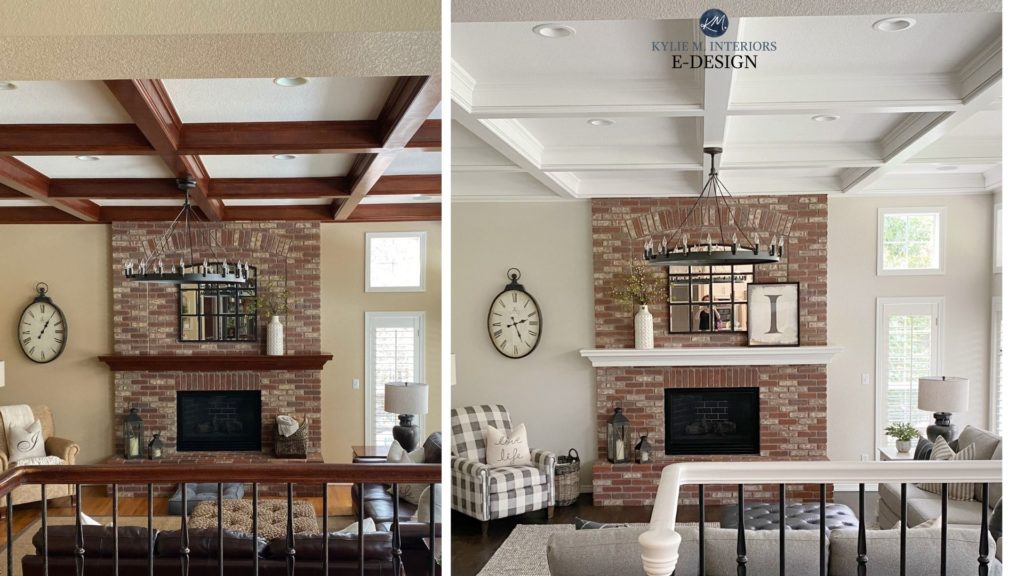
3. EXTRA LIGHT + EXTRA FLAWS
A good dose of direct natural light coming into the room will highlight any bows, seams, or patches. You better hope your drywaller was a stickler for detail…
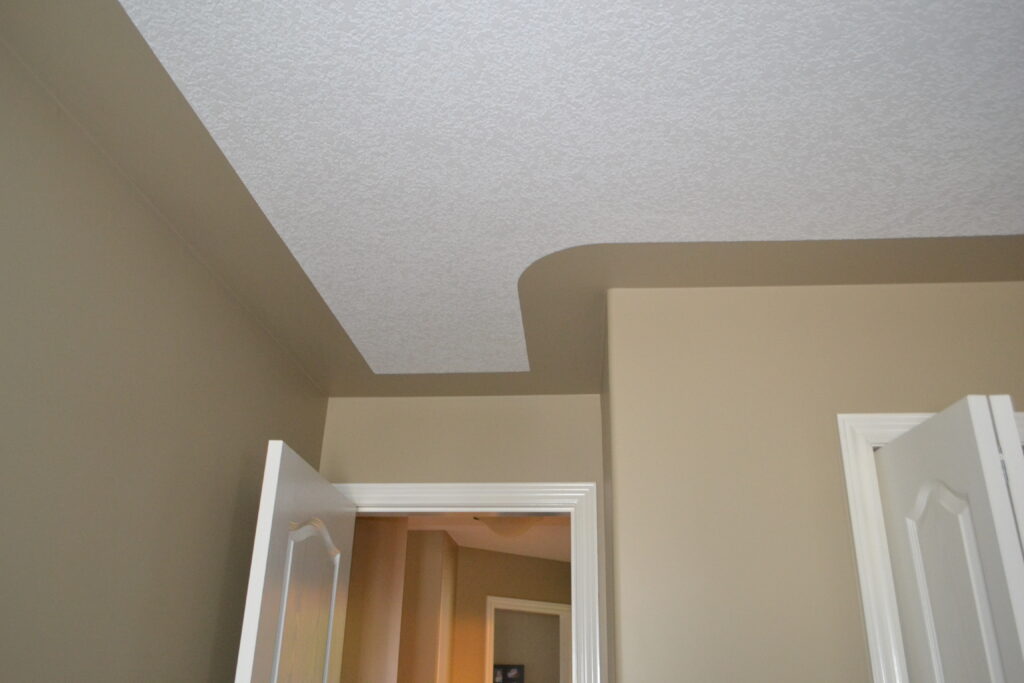
4. IF IT’S BEEN PAINTED, BETTER CROSS YOUR FINGERS (& EYES)
I’m always amazed at how many popcorn ceilings haven’t been painted. I mean, it’s been upward of 50 years, and the damn thing is still in its sprayed-on state – WHO DOES THIS!? So, if you decide to scrape the popcorn off and are lucky enough that your ceiling is unpainted – consider yourself blessed.
Not sure if it’s been painted? Here are a few tips…
- An unpainted popcorn ceiling (or textured ceiling) often looks slightly two-toned, where the base of the ceiling is somewhat darker, and the popcorn seems marginally lighter in contrast.
- Take a wet cloth (after you’ve tested for asbestos) and wipe an area that is tucked away – in other words, don’t do this in the middle of the room. If you wipe the ceiling and the popcorn wipes off (which means it absorbs the water), it isn’t painted. You may be in for a fight if it doesn’t wipe off.
Take a wet close and wipe your ceiling. If the popcorn or texture wipes off, it hasn’t been painted. If it doesn’t come off, you may be in for a fight.
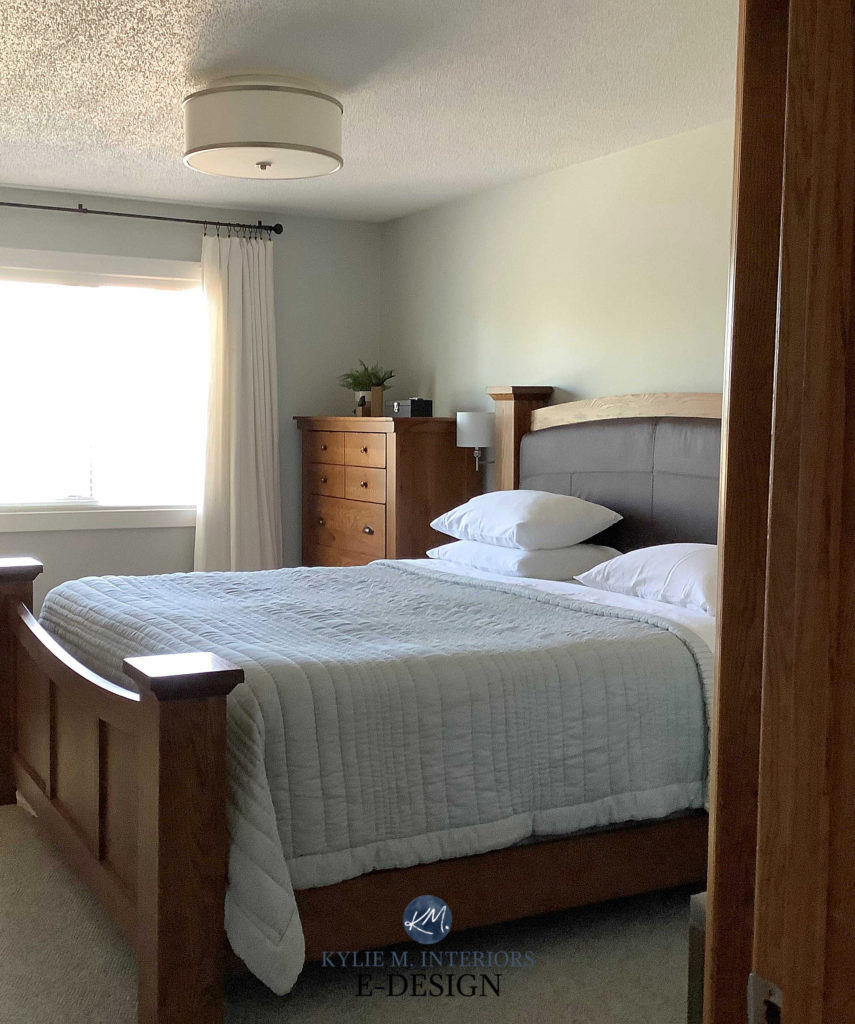
Considering the sheen, I guarantee this ceiling has been painted.
The Best Paint Colors with Wood Trims or Cabinets
Now, why do I say cross your fingers?
Well, you’d better hope that it scrapes off easily. If the paint on it is oil, you’ll need a heavy-duty stripper (sadly, I’m retired), rolls and rolls of plastic and tape, and it will likely include vast chunks of your drywall. And remember, a patched flat ceiling will be very noticeable if it’s not fixed by a professional – you may be good at drywalling, but I bet you’re not that good.
By the time you are done turning off the electrical, hosing your ceiling down with a potentially toxic stripper, scraping, drinking, patching, swearing, sanding, painting, etc…you may have decided that maybe you should’ve just re-drywalled the damn thing and called it a day. I’ve also read that you can try vinegar and water – call me a skeptic, but I bet it’s not that effective, particularly if it’s oil paint.
So, what’s the moral of my story?
If it were my home, this is how my priorities would fall…
1. If it’s unpainted, HELL YEAH, I would try scraping it and cross my fingers that the ceiling’s in ‘reasonable’ shape when I finish. I would then hire a professional to make it smooth and level or learn to live with an imperfect surface.
2. If it’s painted, I’m on the fence. I would grab a large tub of butter and a salt shaker and embrace the popcorn, or I’d dive in and cross my fingers that it works out. Worst case scenario? It doesn’t go well, and you have to put up new drywall or use some sort of planking/paneling to cover up the mess – either way, at least you won’t have popcorn anymore! (read about drywall installation and how to plank a popcorn ceiling).
Ideas to Update Your 1990s Home
POPCORN CEILING REMOVAL – HOW-TO’S
- Great instructions (and hands-on advice) for how to remove a popcorn ceiling: Rain on a Tin Roof
- How to Remove Popcorn Ceiling: Today’s Homeowner
- How to Remove Popcorn Ceiling: Bob Vila style
- A well-laid-out case for covering a popcorn ceiling with new drywall: Family Handyman
- How to plan a popcorn ceiling: Edith & Evelyn Home
Are you a glutton for punishment?
- How to Remove PAINTED Popcorn Ceiling – This video will not prepare you for the blood, sweat, and beers coming your way: Youtube video.
So there you have it, no rainbows, no unicorns – just plain old common sense.
READ MORE
How to Paint Rounded or Bullnose Corners
How to Paint Two-Storey Walls – The Best Tip You’ll Ever Get
What Colour Should I Paint My Ceiling?
The Best Paint Finishes for Walls, Ceilings, Trims and More

ORIGINALLY WRITTEN IN 2017, UPDATED IN 2024



I have tried the spray and scrape doesn’t work – I’ve been told there is probably a oil base primer or paint – so I don’t know what to do at this time – I decided to take to walls down prior to this and now I can’t scrape it – any thoughts
Ah yes, I bet it’s oil! At this point the best bet really would be to start with fresh new drywall, either going over the existing, or taking down what is there…
I laughed reading this because I can relate. I have contemplated removing a painted popcorn ceiling for over ten years. I have watched videos on skim coating. Although, they make it look easy, I know it isn’t. I took the first step and had it tested for asbestos. I just can’t take the leap to tackle the skim coating. Thank you for all your informative blogs you put out!