
How to Decorate & Design Small Rooms
What’s the best way to decorate a small space?
Whether it’s one room or your entire home, living in a small space doesn’t need to be limiting. In fact, it can encourage you to be more resourceful and thoughtful with your decorating!
Let’s check out a few perks of having a small space or home (and then we’ll get into the good stuff).
SMALL SPACE PERK #1: IT’S EASIER TO MAKE AN IMPACT
Decorating a big space can cost big money as there’s more square footage to consider. A smaller footprint means you can make a bigger impact with color or texture.
SMALL SPACE PERK #2: YOU CAN ACHIEVE ANY LEVEL OF INTIMACY
Whether you’re going for cozy and comfy or bright and airy, small spaces allow you the breathing room to create any type of mood.
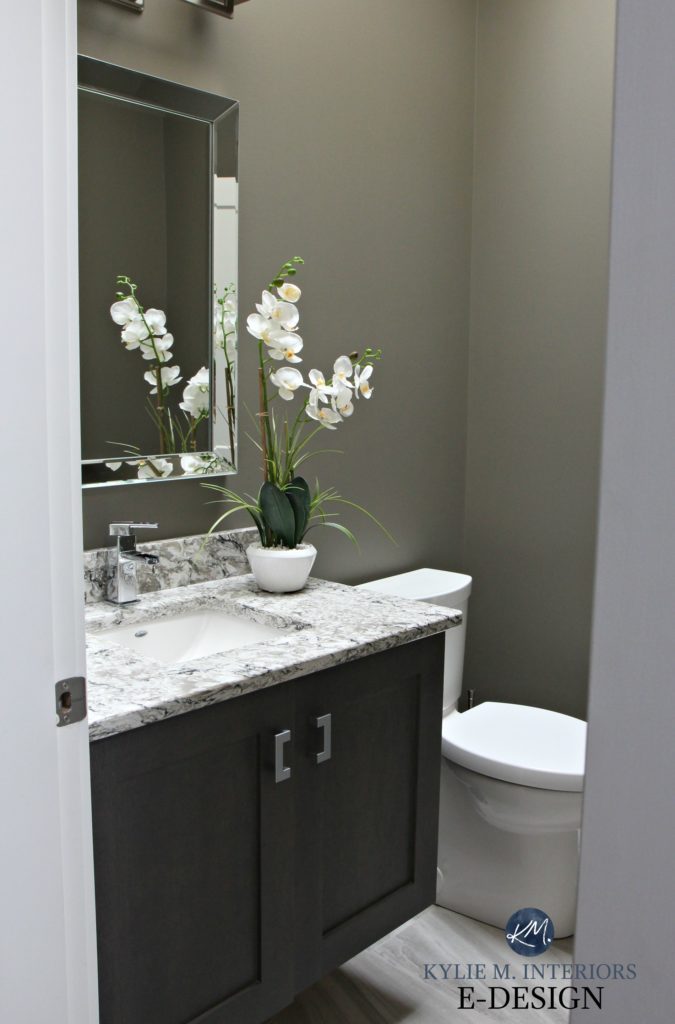
A small room is a great place for an intimate, dark color (Sherwin Williams Anonymous), as shown in the bathroom below (because people love getting intimate in bathrooms, right?)
SMALL SPACE PERK #3: YOU’LL SAVE MONEY
The smaller the space, the less money you will spend on flooring products, countertops, window coverings etc…you can then spend smart money where it counts!
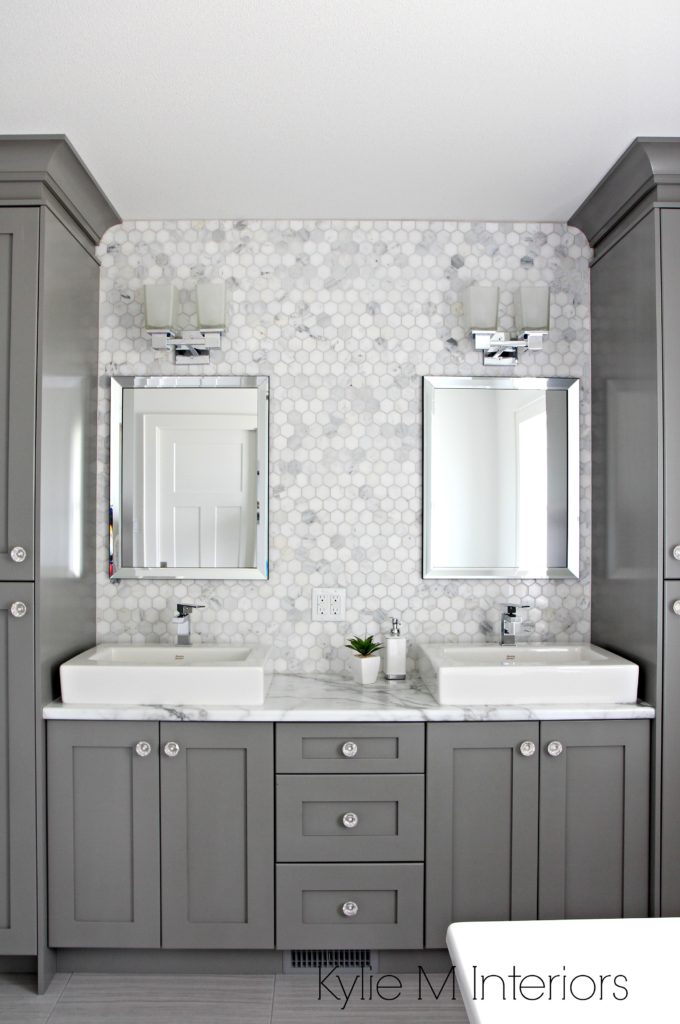
While the backsplash tile (above) wasn’t cheap, the cost was more manageable because it was a smaller space.
SMALL SPACE PERK #4: YOU CAN GO A LITTLE…OR A LOT CRAZY
(I fully embrace this idea…daily)
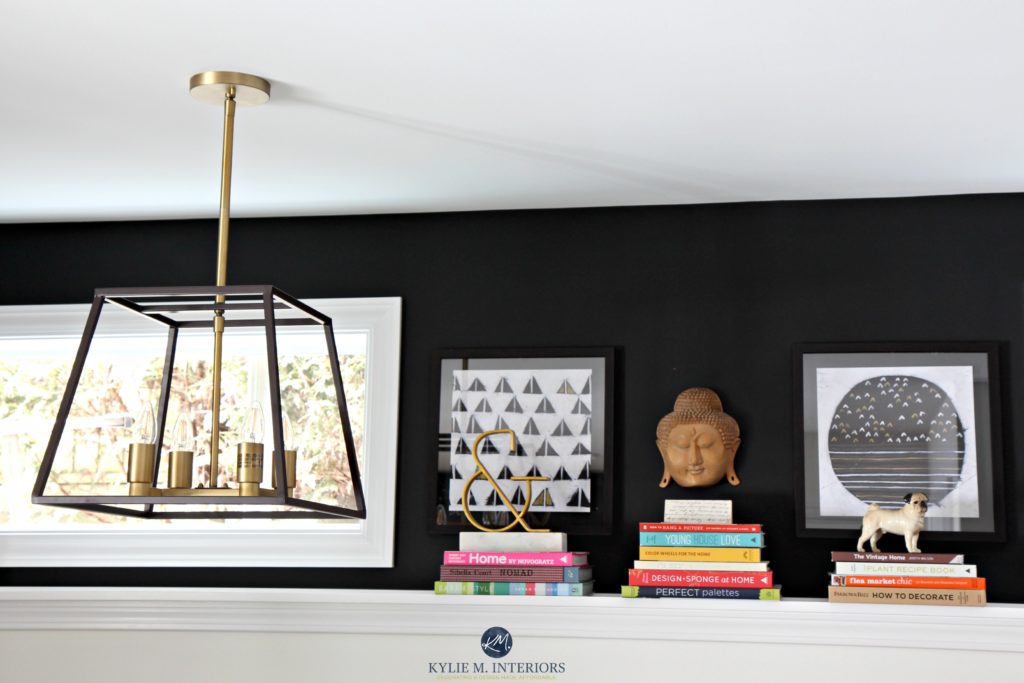
Small spaces have a high level of forgiveness when it comes to quirky. You might not consider painting a large room a rich, deep burgundy or chocolatey shade of brown. However, a small space feels like much less of a commitment and allows you the opportunity to inject personality and pizzazz without it appearing ‘larger than life’.
Now that we have discussed how awesome small spaces are, let’s explore some ideas for maximizing their potential!
But (a big one…Kardashian-sized), you’ll want to make a big decision before reading the tips below. Bottle or box. Just joking. Kind of. Seriously though, you need to choose one of the following statements:
1. I want my space to look bigger
2. I want to embrace my small space
Before we get started, I know that some of these photos aren’t small rooms, but I’m including them to support the ideas I have for you! I do rely 99.5% on my Online Color Consulting and local client photos, so humor the Ginger ;).
MIRRORS MAKE YOUR SPACE LOOK BIGGER & BRIGHTER
Mirrors act like windows by spreading natural and artificial light around the room. This will make the room appear bigger and brighter, especially if they reflect a light fixture like the one below (oh, I have some TALENTED clients…)
Sherwin Williams Agreeable Gray Paint Color Review
Mirrors with a well-chosen, moderate frame can also lower the contrast against your walls, whereas vibrant artwork can raise the contrast, making the space look smaller.
Mirrors are great in any room, regardless of size. They add style and sheen and give your eyes a break in a room with a lot of other things going on.

In a small space, use a mirror to reflect something you like to look at (e.g., a window, fireplace, or yourself). If you have a lot of artwork in the room, mirrors will give your eyes a visual break without leaving a blank wall space.
-
Mirrors are especially great at the end of long hallways or narrow entryways.
-
Try not to reflect a doorway (bad Feng Shui)
- The center of your mirror (if it is not hanging above anything) should be approximately 62″ from the floor.
On the other hand, if you don’t want your small space to look bigger, you want it to look badass; don’t worry too much about the contrast.
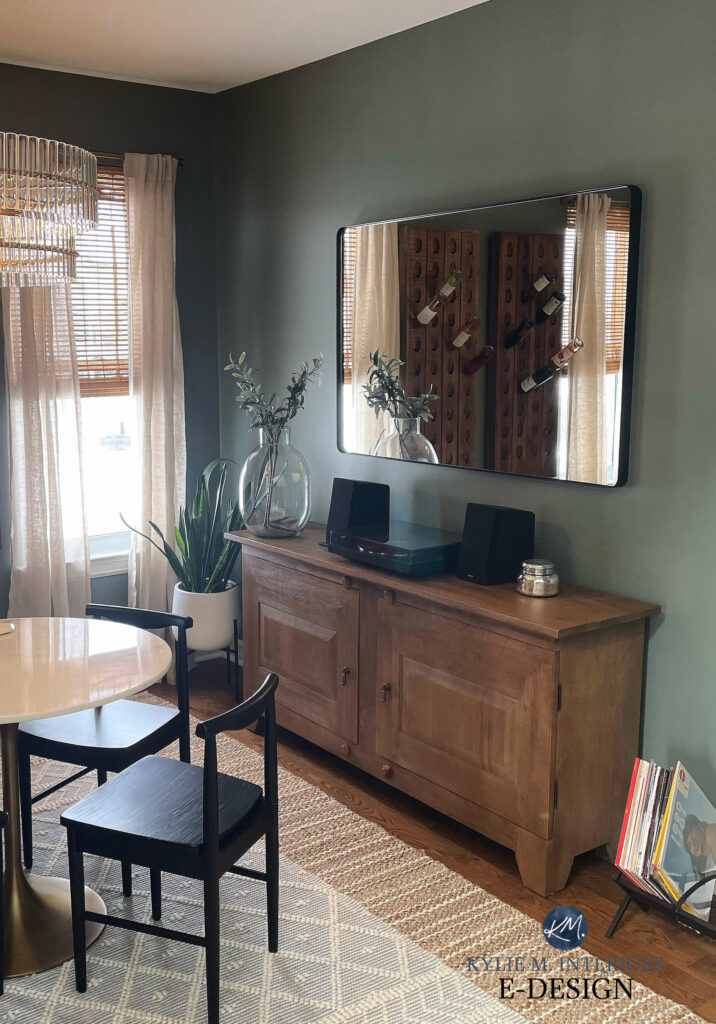
- Mirrors are still great as they add reflection and energy to a space.
- Consider artwork that contrasts with the walls or adds personality to your space, including a gallery wall. Personally, I’d rather have a small space with personality than a small space that, no matter what I do, is still small (except for resale).

USE DRAPES & BLINDS THE RIGHT WAY
What is the right way? Well, it depends—do you want your small space to look bigger or more intimate, brighter or more interesting? Let’s see.
If you want your small space to look bigger, choose drapes the same color as your walls or a shade lighter or darker. As for blinds, it’s best to coordinate them with your trim color, not your wall color.

Paint Color Review of Benjamin Moore White Dove
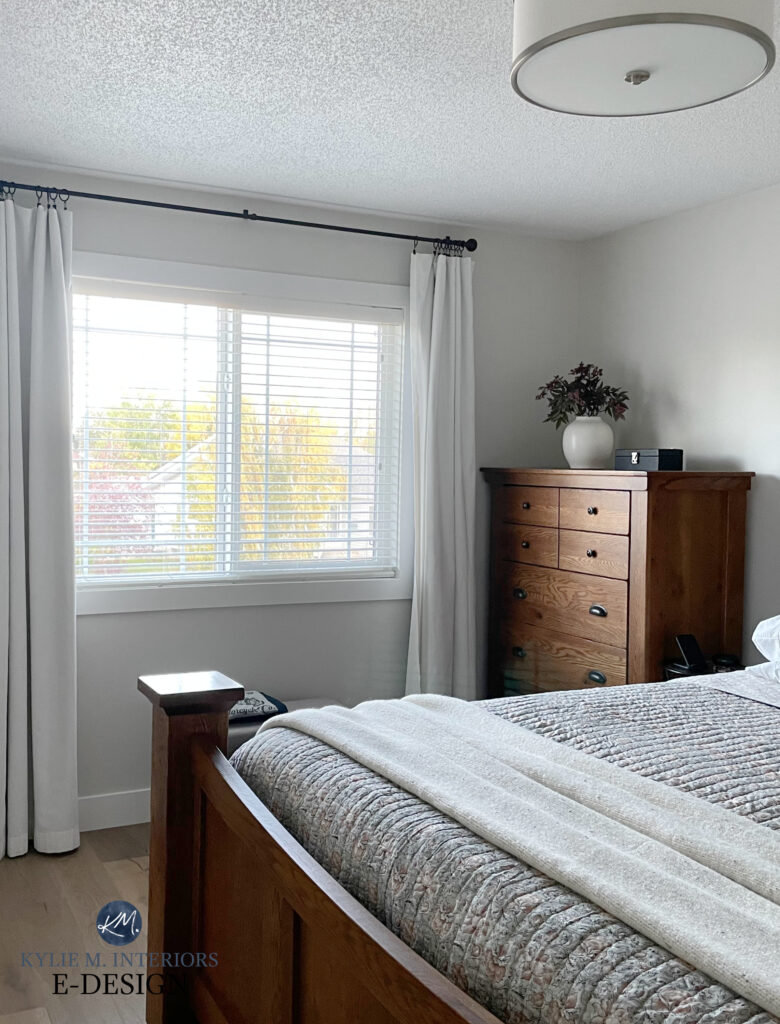
If you choose blinds and drapes, the most common choice is for the blinds to match or be a tone or two lighter than the drapes (but still in the same color family). If your drapes are reasonably light, you might choose blinds that match your trim, like the bedroom below…
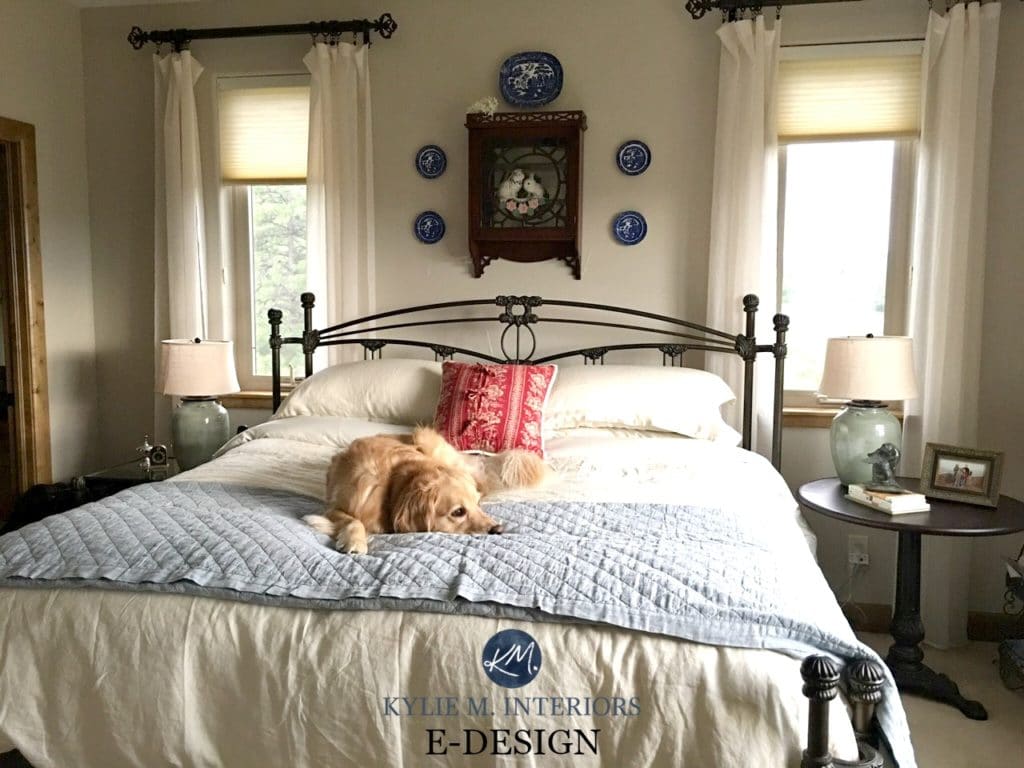
For this next room, the tone-on-tone paint color and drapes help the room look cozy but a bit bigger than darker drapes. However, the blinds are a bit too yellow for this palette.
Paint Color Review of Sherwin Williams Accessible Beige
High contrast feels smaller and cozier. Low contrast feels bigger.
On the other hand, if you want your space to look interesting, layered, and cozy, choose drapes that are a pattern, a different color, or significantly lighter or darker than your walls. This will make your room look smaller.
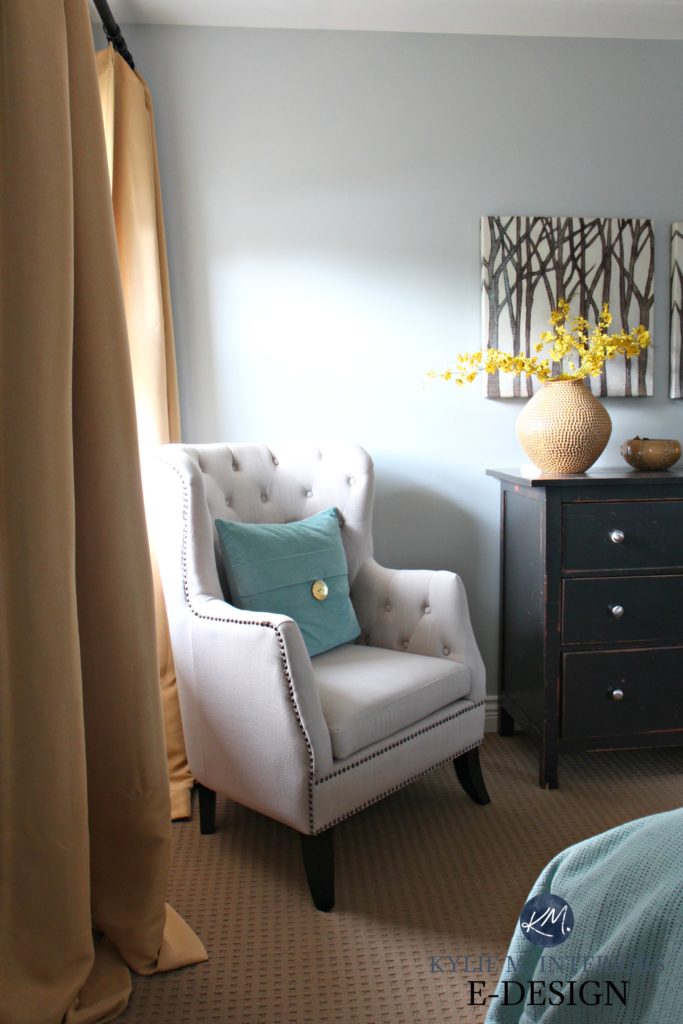
Choosing a color different from your wall paint color will define your window coverings from your wall space, which will help your room feel cozy, comfy, and decoratively layered.
FURNITURE IDEAS FOR YOUR SMALL SPACE
Furniture can either make or break a small room. Now, I’m not here to talk about space-saving furniture, as that’s an entire blog post unto itself. I’m here for some eye candy and general tips to get you on the right path!
Even if you don’t want your small room to look bigger, some common tips will help ensure your space’s function and flow work.
- GENERAL: Furniture with clean, simple lines is best—nothing overstuffed or detailed. Overstuffed or oversized furniture can look cool and add personality, but it can also upset a space’s flow and function.
- BIGGER: Consider open legs vs furniture with skirts.
- GOOD ENERGY: Side tables and coffee tables with shiny or glass tops reflect more light, which adds energy and life to a space and makes it look bigger.
- BIGGER: Keep your palette simple. If you’ve chosen your wall color, find fabric pieces in a similar family that are the same depth or a shade or two lighter or darker—keep the contrast low. If your furniture’s backdrop is a built-in cabinet, consider furniture that has low contrast with that piece.
- PERSONALITY: If you’re not worried about your room looking big, you might still consider scale and legs, but choose a fabric in a wicked cool pattern or contrasting color.
- BIGGER: If your flooring is a bit darker, some darker accent pieces can flow nicely, as the contrast with the floor will be lower.
- GENERAL: If you have enough room in your living room, don’t push your furniture against the wall; leave some air space (not always possible).
- GENERAL: If you also have a low ceiling, consider low-profile vs. high-backed pieces.
The accent chair in this next living room is awesome—open arms and legs. While it’s in higher contrast with the wall, it grounds the space as it’s in tune with the flooring/rug.

Sherwin Williams Greek Villa (lightened) and Extra White
This next living room isn’t necessarily small, but there are some great lessons in it…

- Notice how the darker accent chair is in low contrast with the built-in.
- The other two accent chairs are in low contrast with the wall color.
- The dark sofa makes the space look COZIER, not bigger (considering that the goal wasn’t to make this space look big or small).
- The side tables are glass. A more modest/less graphic frame would make the room look bigger.
- The dark accent chair has open arms and visible, slightly taller legs.
Now, if that’s all too boring, you might be looking for some fun with a wild and wonderful color or pattern. While this next chair/floor/wall combo isn’t particularly wild, the contrast of warm vs. cool adds some personality and interest compared to a tone-on-tone palette.

My Paint Color Review of Benjamin Moore Anchor Gray
This next living room is only 13′ deep, which doesn’t leave a ton of room to move. Rather than trying to make it look bigger, I went with a bit of personality and layering with colors and patterns…

My Paint Color Review of Benjamin Moore White Dove
Click on the above image to view available packages!
USE WOOD TO MAKE YOUR SMALL SPACE LOOK BIGGER…OR AT LEAST BETTER
Be consistent with your wood (I’m always saying this to Tim). In a small space that you want to look larger, stick to one wood color. This includes wood or laminate if you have it.
While you can vary it subtly from tone to tone, you’ll want to stay pretty darn consistent and avoid a mix of stains or woods.
Again, this living room is such a great example. Notice how the wood stain’s depth and undertone are consistent, with only the flooring being a touch darker…

Sherwin Williams Agreeable Gray vs. Repose Gray, Revere Pewter, & More
While the wood on the chair is a good tone darker, it still more or less recedes in this palette.
IF YOU JUST WANT YOUR SMALL SPACE TO LOOK COOL
If you’re ready to embrace your small space, it still makes sense to be consistent with your wood tones, as this helps a small space look pulled together. You can stretch things with different woods with different grains and depths but stick with consistent undertones.
How to Mix & Match Wood Stains
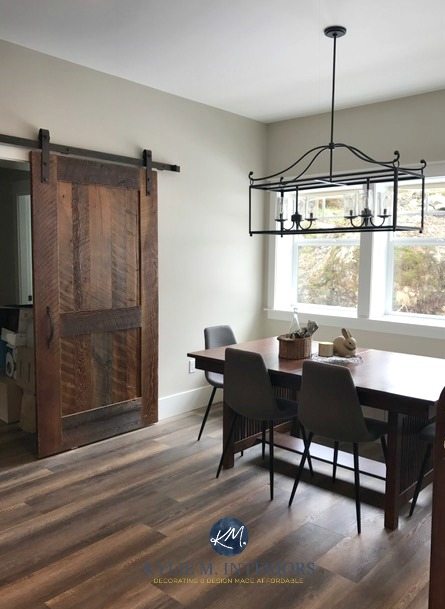
My clients (above and below) did a beautiful job of coordinating their tones of various wood tones.
CAREFULLY CONSIDER YOUR PAINT COLORS
This bad boy is a topic unto itself. In fact, I wrote a blog post on it (you’ll find the link after this section). But to get you started, here’s the long story made short…
- Cool colors recede, and warm colors advance. Recede visually pushes the walls out, while advance visually brings them in.
- Light colors recede, and dark colors advance.
This means that if you want your small space to look bigger, you might consider light and cool colors so that visually, you are pushing the walls out twice – once with depth and again with temperature!
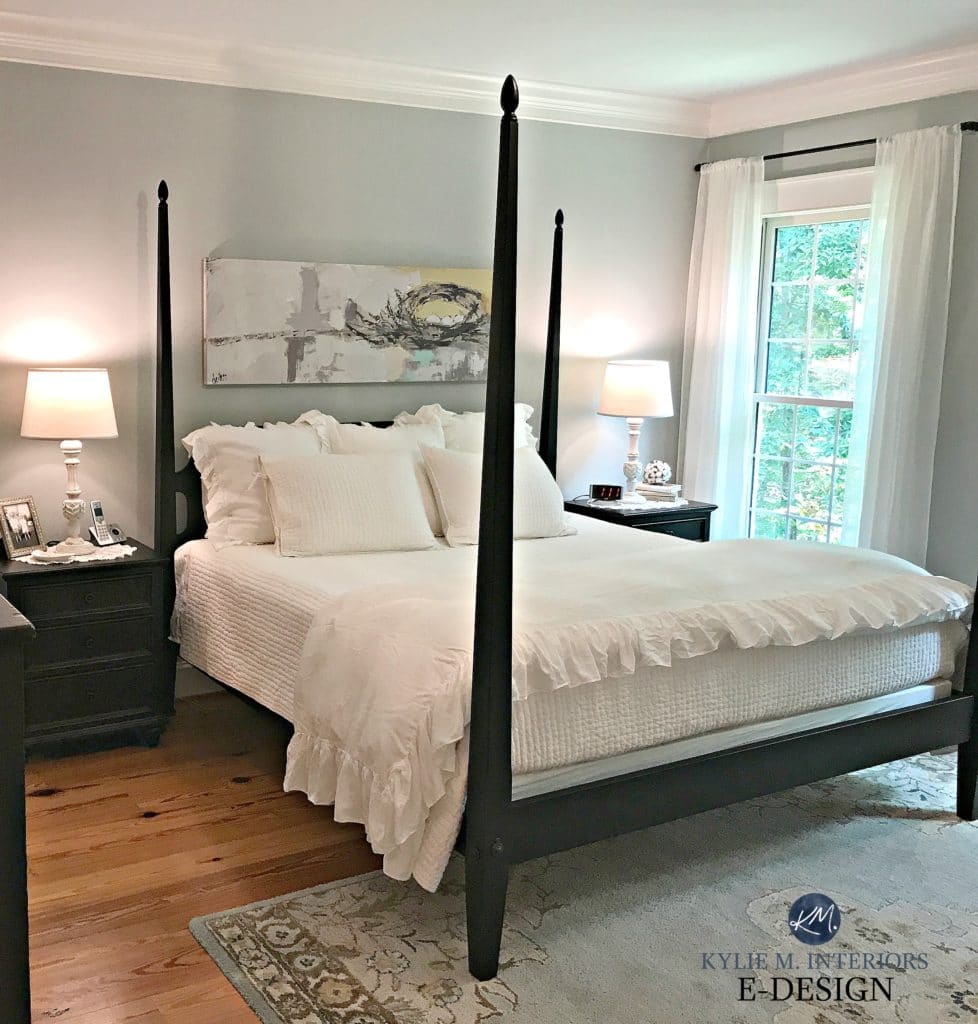
In this next photo, my client (a super long-time fave) used a soft, cool color on the walls, adding texture to the linens/art and contrasting it with the furniture to add visual interest!
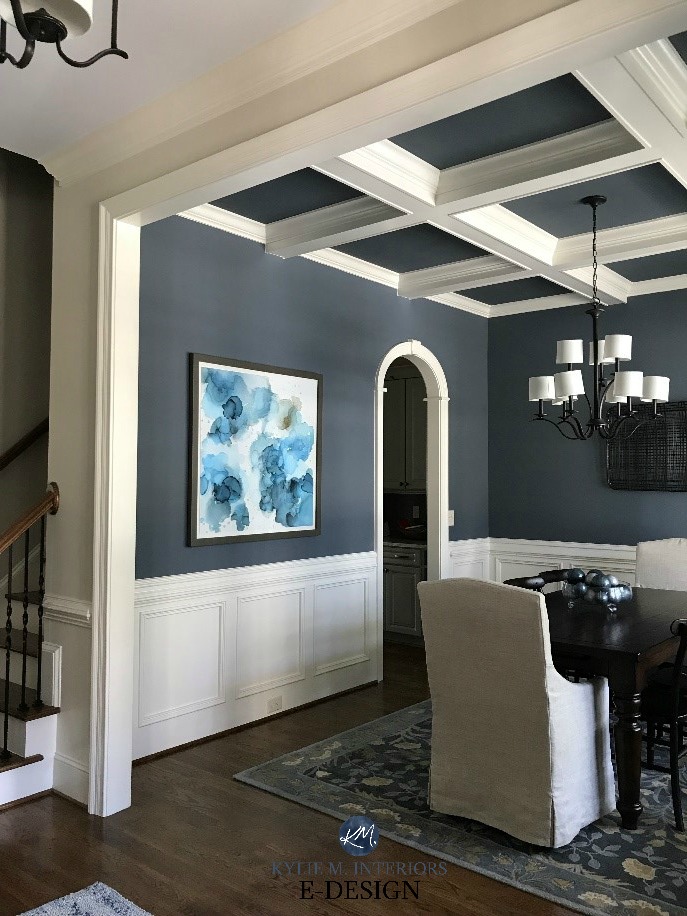
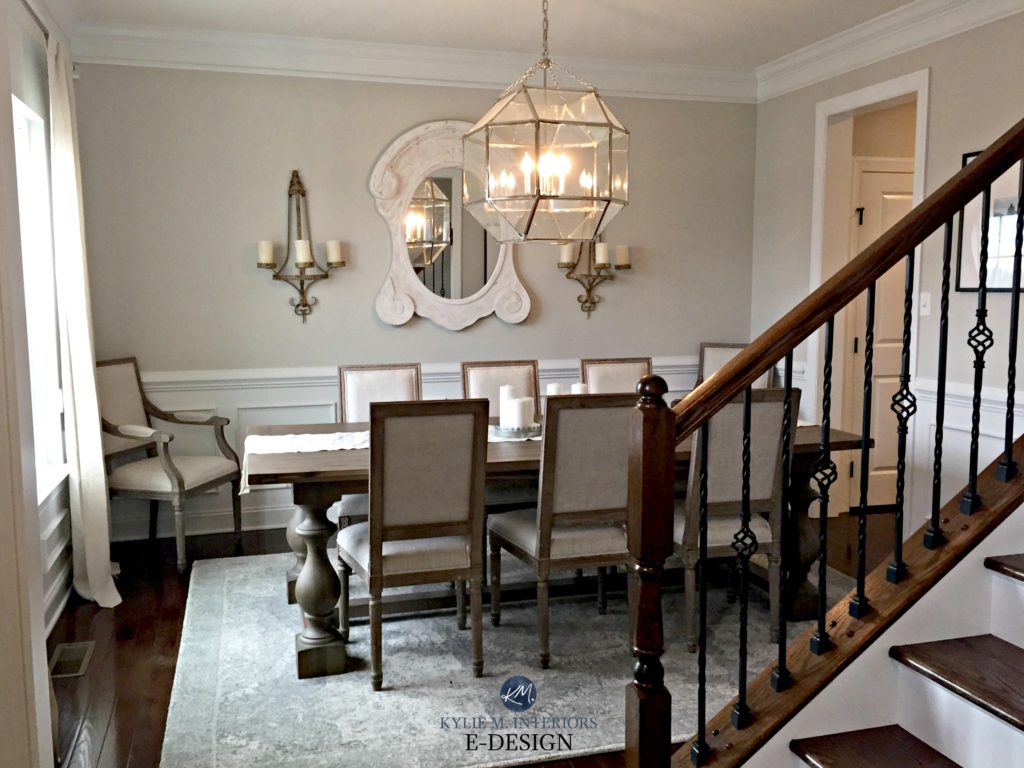
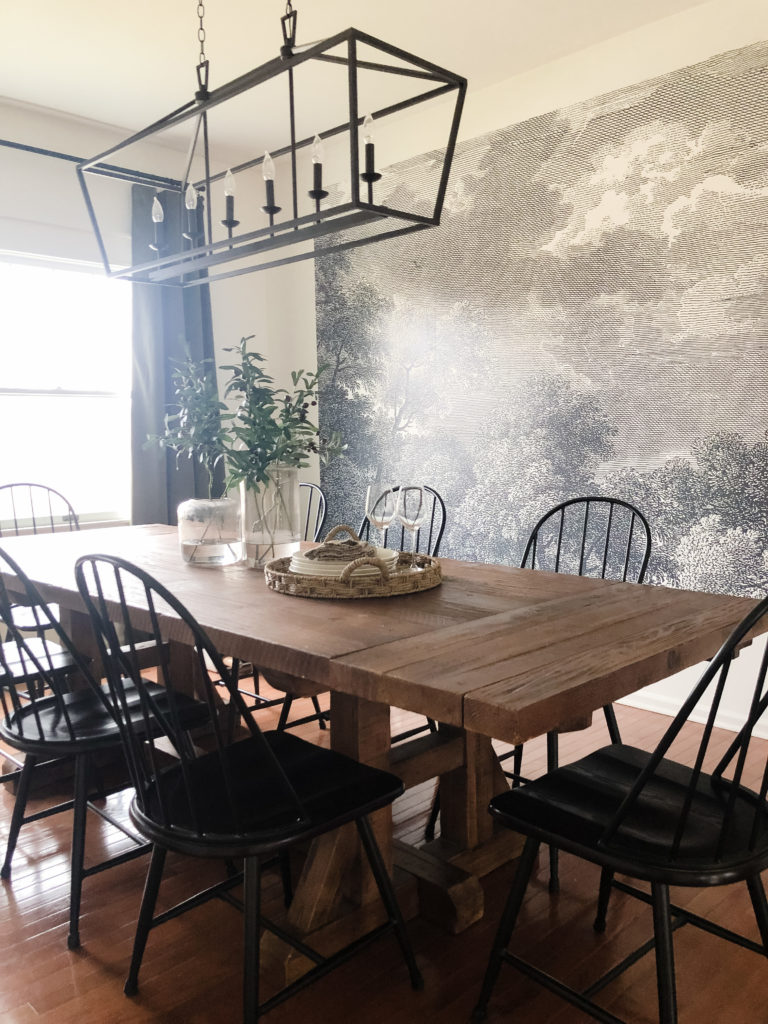
With all this said, I’m a big fan of using paint to a) make a visual statement and b) save money, honey. The above dining room is drool-worthy with its dark, cool paint color. Even though cool colors recede, adding DEPTH brings them back in!
Paint is the least expensive way to add interest to your space and the best way to drive your husband crazy (or maybe it’s just mine…), so don’t underestimate the visual value of an awesome color – especially in a small space!
The 19 Best Paint Colors to Make a Small Room Look Bigger!
How to Make a Small Room Look Bigger With SHEEN!
Make a Room Look BIGGER or SMALLER With Paint Colors
How to Decorate & Design Small Spaces & Rooms
6 Ideas to Make a Dark Room Look Bigger & Brighter
The 8 Best White & Light Paint Colors for a Dark Room
NEED HELP?
Check out my Online Paint Consulting packages!

Originally written in 2018, updated in 2024




What is the darker paint color in the above dining room with coffered ceilings? Thanks
Hi Sarah, thank you for asking, that is SW Wall Street!
What white should I use in a beach house? The floors are espresso. Open floor plan. I will be painting the entire house, except bathrooms the same color white. The house is bright, rooms are smaller.
With white, it can depend on the other finishes in the room, ie: the type of white in the countertop or furnishings (warm white/stark white/etc…). Off the top of my head, I’d check out BM Simply White and SW Pure White. If you want something softer, BM White Dove 🙂
The picture on the dining room wall above…do you know where that came from? It is gorgeous! Thanks, in advance!
Oh I’m so sorry, I don’t!